Lawn Pest Control in Chatham
The best way to deal with lawn-damaging insects like grubs and chinch bugs is to identify the actual pest first, then treat only where it's needed while building a lawn healthy enough to resist damage going forward. Chatham Lawn Care delivers licensed lawn pest control using an Integrated Pest Management (IPM) approach — timed treatment for the pest you actually have, with your do-not-treat zones respected. We serve lawns across Chatham.
Common lawn pests in Chatham
Different insects call for different treatment and timing, so we identify what's actually damaging the turf before we treat. These are the pests we see most often on Chatham lawns:
Grubs
Small, white, C-shaped larvae that live just under the surface and feed on grass roots. Damaged turf turns spongy and brown and pulls up loosely like a piece of carpet, and heavy grub populations often attract skunks or raccoons digging up the lawn overnight to get at them.
Chinch bugs
Tiny insects that suck moisture out of grass blades, causing irregular yellow-to-brown patches — especially in hot, dry, sunny areas near driveways and sidewalks. Because the damage looks so similar to a thirsty lawn, chinch bugs are one of the most commonly misdiagnosed lawn problems.
Other turf-damaging insects
Other surface- and soil-feeding insects can thin or brown a lawn in similar ways. As with grubs and chinch bugs, we confirm what's actually present before recommending any treatment, rather than treating for a guess.
Is it pests, or just a dry lawn?
One of the most common questions we get: is this damage from grubs or chinch bugs, or is the lawn just stressed from heat and dry weather? A few quick checks usually tell the story.
| What you see | Quick way to check | What it likely means |
|---|---|---|
| Spongy, browning turf that pulls up loosely | Grab a handful of the damaged patch and tug. Grub-damaged turf lifts like a loose carpet with little root underneath, and you'll often see small white C-shaped larvae in the soil. | Grubs — worth a targeted assessment before treating. |
| Irregular yellow-brown patches in sunny, hot spots | Water the area well. Drought-stressed grass typically greens back up within a couple of days; chinch bug damage generally doesn't. | Chinch bugs — most active in hot, dry mid-summer conditions. |
| Overnight digging or torn-up turf | Look for fresh digging from skunks or raccoons hunting grubs just under the surface. | A strong sign of a grub population worth checking for. |
| Uniform fading that recovers after rain | If the whole lawn is dull rather than patchy, and it greens up after a good watering or rain, it's usually not an insect at all. | Drought stress or a watering/mowing issue, not a pest. |
Not sure which one you're dealing with? We assess the lawn and confirm the actual cause as part of a free quote before recommending any treatment.
When to treat grubs vs. chinch bugs
Timing matters as much as the treatment itself — each pest has a window when control is most effective.
| Pest | Best treatment window | Why |
|---|---|---|
| Grubs | Late summer into early fall (roughly August–September) | Larvae are small and feeding near the surface, making them easiest to reach and control before they burrow deeper for winter. |
| Chinch bugs | Hot, dry stretches of mid-summer | This is when chinch bugs are most active and damage spreads fastest, so early-summer monitoring lets us catch and treat an infestation before it grows. |
A healthy lawn resists pest damage
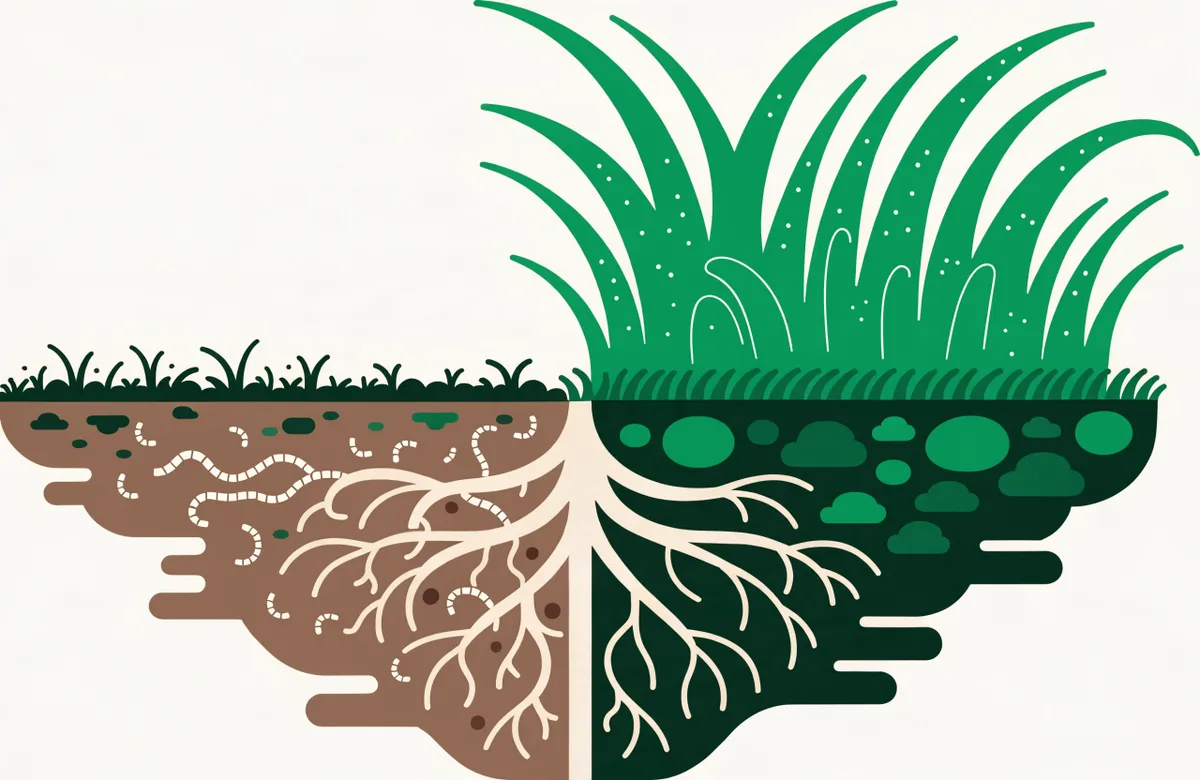
Treatment controls the pests you have right now, but it doesn't change how much damage the next infestation does. Thin, stressed turf shows insect feeding fast and recovers slowly, while thick, deep-rooted grass tolerates the same level of grubs or chinch bugs with far less visible damage — and bounces back faster once it's treated.
That's why the most effective long-term pest strategy isn't just more treatment — it's a healthier lawn. Regular feeding, correct mowing height, and consistent watering reduce the plant stress that makes turf attractive to pests in the first place, and build the root reserves that let grass shrug off feeding damage. We treat the pests you have today and help fix the conditions that invite them.
The healthy-lawn pest defence
- Deep, well-fed roots tolerate insect feeding with less visible damage.
- Correct mowing height reduces the plant stress pests target.
- Consistent watering keeps turf from the drought stress chinch bugs favour.
- Aeration relieves compaction so roots grow deeper and stronger.
- A resilient lawn recovers faster after any treatment.
Build that defence with our fertilization program and aeration & overseeding — a thick, well-fed lawn is more resistant to pest damage in the first place.
Our licensed, IPM approach — and do-not-treat zones respected
Ontario restricts the cosmetic use of many lawn pesticides, and applying insect control products for hire requires proper licensing. We operate as licensed applicators, use only permitted products at legal rates, and follow Integrated Pest Management (IPM) — meaning we identify the actual pest first, lean on cultural practices like proper watering and mowing height as the first line of defense, and use the least product necessary. We treat only the areas that need it, never blanket-treat a whole property, and always respect the do-not-treat zones you request, such as vegetable gardens, ponds, play areas, and pollinator beds.
Licensed & compliant
Treatments are made by trained, licensed applicators using only permitted products at legal Ontario rates.
Targeted, not blanket
We identify the pest first and spot-treat problem areas rather than treating the whole lawn — better for your yard and the environment.
Do-not-treat zones honoured
Tell us what to avoid — gardens, ponds, play sets, pollinator beds — and we keep those areas completely product-free.
Clear re-entry guidance
After each visit we tell you exactly how long to keep kids and pets off the treated area — usually just until it dries or is watered in.
What does lawn pest control cost in Chatham?
Because every lawn and every infestation is different, pricing depends on a few key factors rather than a flat rate. Here's what affects the cost:
Lawn size
More area to assess and treat means more product and time — the main cost driver.
Extent of infestation
A small, localized patch costs less to treat than damage spread across the property.
Follow-up treatment
Heavier infestations sometimes need a second visit to fully bring the pest under control.
Which pest is present
Grub and chinch bug treatments use different products and timing, which can affect price.
Access & do-not-treat zones
Gardens, ponds, or other areas to work around can affect time on site.
Lawn condition
Thin, weak lawns often benefit from fertilization or aeration alongside treatment for a lasting fix.
We’ll assess the lawn and give you a firm, property-specific price with your free quote within 24 hours.
Lawn pest control FAQ — Chatham
Straight answers to the questions we hear most about grubs, chinch bugs, and lawn pest control in Chatham and across Chatham.
How do I know if my lawn has grubs or chinch bugs, or if it's just dry?
The quickest check is the tug test: grab a handful of the damaged patch and pull. If it lifts up loosely like a piece of carpet with little root left underneath, and you see small white C-shaped grubs in the soil, that's grub damage. Drought-stressed grass, by contrast, stays rooted and usually greens back up within a couple of days of good rain or watering — chinch bug patches typically don't. Increased digging from skunks or raccoons overnight is another strong sign of grubs, since they're hunting the larvae. If you're not sure which one you're looking at, we can assess it as part of a free quote before recommending any treatment.
Is lawn pest control safe for kids and pets?
Yes, when it's applied correctly by a licensed applicator. The standard precaution is simple: keep children and pets off the treated area until the product has fully dried or, for granular treatments, until it's been watered in — usually a few hours. We apply professional products at label rates, treat only the areas that need it, and give you clear re-entry instructions after every visit. As licensed applicators following an IPM approach, we use the least product necessary to control the pest.
What are the rules for pest control treatment in Ontario?
Ontario restricts the cosmetic use of many lawn pesticides, and applying insect control products for hire requires proper licensing under provincial rules. We operate as licensed applicators, use only permitted products at legal rates, and follow an Integrated Pest Management approach that identifies the actual pest and puts lawn health first. We also respect any do-not-treat zones you request and keep applications targeted rather than treating a whole property blanket-style.
When is the best time to treat for grubs?
Late summer into early fall — roughly August through September — is generally the most effective window for grub treatment, because that's when the larvae are small, feeding near the surface, and most vulnerable. Treating earlier or later, once grubs are larger or have moved deeper into the soil for winter, tends to be less effective. We monitor lawns through late summer so treatment can be timed to when it will actually work.
When is the best time to treat for chinch bugs?
Chinch bugs are most active and do the most damage during hot, dry stretches of mid-summer, so that's when treatment is typically most effective and most needed. They favour sunny, drought-stressed turf, which is also why chinch bug damage is so often mistaken for a lawn that's simply thirsty. Catching an infestation early in summer, before it spreads across a larger area, makes treatment more effective and reduces how much needs to be done overall.
Can a healthy lawn prevent pest problems?
A thick, well-fed lawn with strong roots doesn't just look better — it tolerates insect feeding better and recovers faster, so the same level of grubs or chinch bugs does noticeably less visible damage. Proper mowing height and consistent watering reduce the plant stress that makes turf more attractive to pests in the first place. That's why we pair pest treatment with our fertilization and aeration services — building lawn health is the best long-term reduction in pest damage, alongside targeted treatment when a real infestation shows up.
Stop grubs and chinch bugs before they spread
Get a free, no-obligation lawn pest control quote for your Chatham property. Licensed, targeted, and paired with a healthy-lawn strategy that resists damage long-term — with a firm price within 24 hours.
Serving Chatham and the surrounding Chatham communities.