Lawn Overseeding in Chatham, Ontario
Overseeding is the fastest, most cost-effective way to turn a thin, patchy, or worn-out lawn into a thick, green carpet — without tearing it out and starting over. It means spreading fresh cool-season grass seed over your existing lawn so new grass fills in the gaps and crowds out weeds. In Chatham, early fall is the ideal time to overseed: warm soil, cool nights, and reliable moisture give new grass the perfect head start. Chatham Lawn Care overseeds lawns across Chatham, and gets the best results by pairing it with core aeration and a light topdressing.
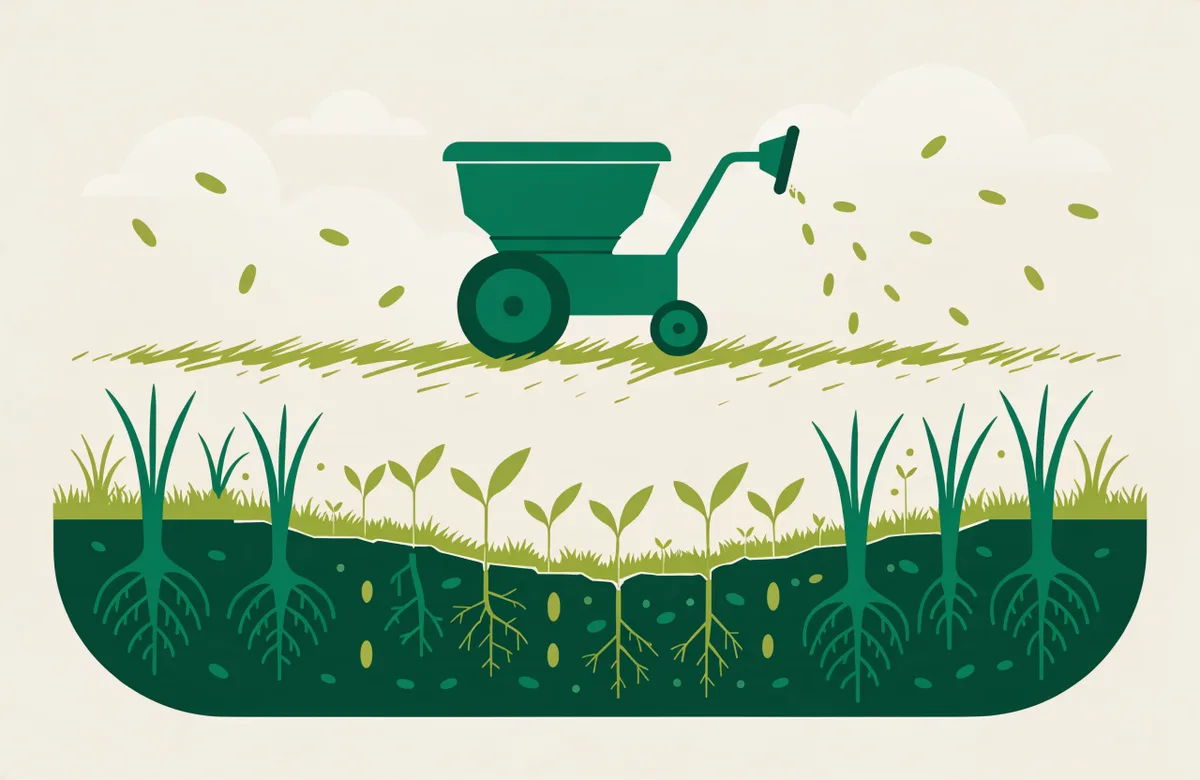
What is overseeding and why does your lawn need it?
Overseeding is the practice of sowing new grass seed directly into an existing lawn — no tilling, no starting from scratch. Over time, even a well-kept lawn thins out: individual grass plants age and slow down, summer heat and foot traffic take a toll, and bare or patchy spots invite weeds. Overseeding introduces fresh, young, vigorous grass that fills those gaps and keeps the whole lawn dense and healthy.
The single biggest benefit is a thicker lawn, and a thick lawn is a self-defending lawn. Dense turf shades the soil so weed seeds can’t germinate, out-competes crabgrass and clover for water and nutrients, resists disease, and simply looks better. It’s the difference between constantly fighting weeds and bare patches versus a lawn that largely takes care of itself.
Signs your lawn is ready for overseeding
- Thin or see-through turf. You can see soil through the grass, especially in high-traffic areas.
- Bare or patchy spots. Dead patches from drought, pets, disease, or last year's snow mold.
- Creeping weeds & moss. Weeds and moss move in wherever the grass has grown sparse.
- Faded, tired colour. Older grass loses vigour and that deep, even green it once had.
- Heavy foot traffic. Play areas and pathways where the lawn takes constant wear.
- A lawn that never fills back in. Spots that keep struggling year after year no matter how you mow or feed.
The best time to overseed in Chatham: early fall
Timing is what separates a lush overseeding from a disappointing one. In southwestern Ontario, the sweet spot is late August through late September. Here’s why fall beats every other season for our climate:
Warm soil, cool air
Late-summer soil is still warm enough for fast germination, while cooling air keeps young grass from heat stress.
Reliable moisture & dew
Autumn rain and heavy overnight dew keep seed consistently damp — the key to sprouting — with far less watering than summer.
Weeds have quit competing
Crabgrass and summer annuals have stopped growing, so your new grass isn't fighting them for space and light.
A full season to root
Fall-seeded grass roots deeply before winter and explodes into a thick lawn the following spring.
Spring overseeding (roughly mid-April to mid-May) is the second-best window and works well for patch repair, but young spring grass has to survive summer heat and heavy weed pressure. If you want the thickest possible lawn, book fall. Ask about our seasonal fall service offer — fall aeration and overseeding are the perfect pairing.
The winning combo: aerate, overseed, and topdress
Broadcasting seed on top of an existing lawn works, but the results are dramatically better when you do all three steps together in one visit. Each step multiplies the effect of the others, giving seed the direct soil contact and rich footing it needs to thrive:
1. Core aeration first
We pull thousands of small soil plugs from the lawn, relieving the compaction that plagues Chatham's clay. This opens up thousands of seed pockets and lets air, water, and roots move freely. See our dedicated lawn aeration service for the full picture.
2. Overseed into the open soil
We spread a premium cool-season blend so seed drops straight into the aeration holes and onto exposed soil — achieving the seed-to-soil contact that germination absolutely requires, rather than resting uselessly on thatch.
3. Light compost topdressing
A thin layer of quality compost blankets the seed, locks in moisture, feeds the young grass, and gradually improves your soil structure — turning heavy clay into a healthier growing medium over time.
Compaction relief is the foundation of the whole process — learn more about our core lawn aeration service, which we almost always recommend booking alongside overseeding.
Choosing the right seed for southwestern Ontario lawns
Chatham sits in a cool-season grass climate, so we use premium blends rather than a single species. Blending gives your lawn resilience — if one grass struggles in a wet, dry, sunny, or shady spot, another picks up the slack. Here’s what goes into our typical mix:
Kentucky bluegrass
The classic dense, deep-green turf. It spreads by rhizomes to knit into a self-repairing carpet — slower to establish but unbeatable for a thick, uniform lawn.
Turf-type & fine fescues
The workhorses for tolerance — they shrug off drought, handle shade better than most, and stay green with less water, ideal for tougher spots in the yard.
Perennial ryegrass
The fast starter. It germinates in about a week, provides quick cover and erosion protection, and stands up to foot traffic in play areas and pathways.
We tailor the exact ratio to your lawn’s sun exposure, soil, and how hard it gets used, so a shaded backyard and a full-sun front lawn each get the blend that will thrive there.
Our overseeding process, step by step
Every lawn is different, so we start by understanding yours before we spread a single seed. Here’s exactly how a Chatham Lawn Care overseeding visit runs:
1. Lawn assessment
We walk the property, gauge how thin the turf is, check for compaction, thatch, sun, and soil condition, and recommend the right seed blend and whether aeration and topdressing make sense.
2. Prep — mow low & clear debris
We mow the lawn shorter than usual and rake or clear debris so seed can reach the soil surface instead of getting caught in tall grass and thatch.
3. Aerate (recommended)
Core aeration opens the soil, relieves clay compaction, and creates ideal seed pockets — the biggest single upgrade to your results.
4. Overseed at the right rate
We calibrate the spreader and apply the premium blend evenly at the correct rate for your lawn — enough to thicken without wasting seed.
5. Topdress & fertilize
A light compost topdressing protects the seed and locks in moisture, and a starter fertilizer gives the young grass the nutrients it needs to establish fast.
6. Watering & aftercare plan
We leave you with a simple, specific watering schedule and mowing guidance so the seed germinates evenly and the new lawn fills in strong.
Aftercare: watering is everything
Overseeding lives or dies on moisture. New seed has no roots yet, so if it dries out even once during germination, it dies. The goal for the first two to three weeks is to keep the top inch of soil consistently damp — not soaked — with light, frequent watering, ideally in the morning.
Once the new grass is up and growing, you transition to deeper, less frequent watering to encourage roots to chase moisture down into the soil. Fall’s cool temperatures, rain, and heavy dew do a lot of this work for you, which is exactly why fall overseeding is so forgiving compared with summer.
The first month: do’s and don’ts
- Water lightly 1–2× daily until seed germinates (about 2–3 weeks).
- Keep off the seeded lawn as much as possible while it establishes.
- Wait until new grass hits about 3 inches before the first mow.
- Mow high and with a sharp blade so you don't tear young seedlings.
- Hold off on weed control — most herbicides harm new grass for several weeks.
What does overseeding cost in Chatham?
Overseeding on its own typically runs from about $150 to $500 for an average residential lawn, while the high-value aeration + overseeding + topdressing combo usually lands around $300 to $800 because all three steps share one visit. What moves the price:
Lawn size
More square footage means more seed, more product, and more labour — the biggest cost driver.
Which services you combine
Adding aeration and topdressing costs more up front but multiplies your results and value.
Seed quality & blend
Premium, weed-free, region-matched blends cost more than bargain seed but germinate better and last.
Lawn condition
Very thin or badly compacted lawns need heavier seeding rates and more prep.
Pricing is lawn-specific, so a free on-site quote is the only way to get an accurate number. Request your free overseeding quote and we’ll get back to you within 24 hours.
Overseeding FAQ — Chatham
Straight answers to the questions we hear most about overseeding thin and patchy lawns in Chatham and across Chatham.
When is the best time to overseed a lawn in Ontario?
Early fall — roughly late August through late September in Chatham — is the best time to overseed in Ontario. The soil is still warm enough for fast germination, nights are cooling, there is more reliable moisture, and weeds like crabgrass have stopped competing, so new grass establishes quickly before winter. Spring overseeding also works but faces more weed pressure and summer heat, so fall gives the strongest, thickest results.
How long does it take to see results from overseeding?
You will usually see the first blades of new grass in 7 to 21 days, depending on the seed blend and soil temperature. Ryegrass sprouts fastest (about a week), fescues follow, and Kentucky bluegrass is slowest at two to three weeks. The lawn keeps filling in over the following 6 to 8 weeks, and a fall overseeding really shows its full, thickened result the next spring once the new grass has had a winter to root.
Do I need to water after overseeding?
Yes — consistent moisture is the single most important factor in overseeding success. Keep the top inch of soil damp with light watering once or twice a day for the first two to three weeks until the seed germinates, then taper to deeper, less frequent watering as the new grass roots. Fall's cooler weather and heavier dew make this easier, which is one more reason fall overseeding outperforms summer.
How much does overseeding cost in Chatham?
Overseeding an average residential lawn in Chatham typically runs from about $150 to $500 on its own, depending on lawn size and seed quality. The best value is the aeration-plus-overseeding-plus-topdressing combo, which usually lands in the $300 to $800 range for a typical yard because the three steps share a single visit and dramatically improve results. Every lawn is different, so we give a free, property-specific quote within 24 hours.
Should I aerate before overseeding?
Yes — aerating right before overseeding is the gold standard. Core aeration pulls small plugs of soil out of the lawn, relieving the compaction common in Chatham's clay and creating thousands of pockets where seed can nestle into direct contact with soil instead of resting on thatch. That seed-to-soil contact is exactly what germination needs, which is why aerate-then-overseed produces a far thicker lawn than broadcasting seed alone.
What kind of grass seed do you use for Chatham lawns?
We use premium cool-season blends suited to southwestern Ontario — typically a mix of Kentucky bluegrass for a dense, self-repairing turf, fine and turf-type tall fescues for drought and shade tolerance, and perennial ryegrass for fast establishment and wear resistance. Blending species gives your lawn resilience: if one grass struggles in a wet, dry, sunny, or shady spot, another thrives. We match the blend to your lawn's sun, soil, and traffic.
Will overseeding get rid of weeds?
Overseeding fights weeds the natural way — by thickening the turf so densely that weed seeds can't find bare soil, sunlight, and space to sprout. A thick, healthy lawn is the best long-term weed control there is. Overseeding is not an herbicide, so it won't kill existing weeds overnight, but combined with proper mowing, fertilizing, and aeration it crowds weeds out over a season or two.
Ready for a thicker, greener lawn this fall?
Book your overseeding — ideally with aeration and topdressing — and head into next spring with the fullest lawn on the block. Get a free, no-obligation quote for your Chatham property within 24 hours.
Serving Chatham and the surrounding Chatham communities.